

MONDAY, NOVEMBER 16
Happy Monday, Eddies!
Here’s a not-so-hypothetical hypothetical:
The cashier at the grocery store smiles at your elementary-aged kid and asks, “So, what grade are you in?”
How do they answer?
A few weeks ago we posed this question on Facebook, and followed up to ask whether grade levels matter at all in your household. It turns out parents have strong opinions.
Grade levels – like time zones or the kids’ menu – are a social construction (and a fairly recent one at that). Still, parents often ask for suggestions, and our teachers’ answers usually depend on the rough age of the child in question. So we are putting together a series of new Grade-Level Curriculum Guides that map each year subject by subject without locking your kid into a single box.
ALSO IN THIS EDITION:
DEEP DIVE: Why kids dodge grade labels, plus our new K–2 guides.
LATEST IN OPEN EDUCATION: Decodable chapter books, kitchen-table math, 1:1 school laptops, and what’s new in the Marketplace.
5-MINUTE POP QUIZ: Leave the pencil grip alone – and the five handwriting rules our go-to expert checks first.
SWITCHING STORIES: “I’m emotionally exhausted” (he was six) – why families change course before Christmas.
– Charlie (the OpenEd newsletter guy)
P.S. In case you missed the news, we’ve extended the mid-year enrollment deadline through Friday, November 20. Still weighing your options – or know someone looking for a change? Share our 2-minute mid-year Switching Quiz and family stories.
DEEP DIVE
What Grade Are You In?
Parents on Facebook shared how their kids field the question:
“A confused look at me,” said one parent.
“My son asked the cashier, ‘In what subject?!’” wrote another.
“What’s a grade?” was a common answer.
“I’m in fifth grade, but I do seventh-grade math,” answered one daughter.
Many called them an industrial-era holdover – the fruit of Horace Mann and the Prussian model.
But if we put a positive spin, we might join with one parent who said she thinks of them as “developmental guidelines, not cages.”
Another parent noted that when her daughter trailed a grade-level benchmark, it was the early warning sign that led to her child’s ADHD evaluation.
That perspective shaped our new Grade-Level Curriculum Guides:
Preschool shows why read-alouds, counting rhythms, and play beat formal seatwork at age four.
Kindergarten covers 15-minute daily math games (Math With Confidence), gentle phonics, and why there’s no need to panic if reading hasn’t clicked yet.
1st Grade pairs structured phonics (All About Reading, UFLI) with accuracy ahead of timed drills.
2nd Grade bridges to chapter books and uses diagnostics like Exact Path and Miacademy to pace by subject.
We’ll be publishing 3rd through 5th grade guides next week, and 6–8 the week after.
The Latest in Open Education
TOOLS
Decodable chapter books built for older kids catching up on phonics. (Simple Words Books)
Free printable fluency, vocabulary, and comprehension games for grades 4–5. (FCRR)
Two teacher-vetted libraries of no-worksheet kitchen-table math games for K–3. (Math for Love, Games for Young Minds)
A 5-minute speech demo showing the tongue placement behind the American /r/. (Peachie Speechie)
Free custom handwriting worksheet generator with trace, copy, and fade modes. (OpenEd Handwriting Tool)
NEW IN THE MARKETPLACE
Nitro Type typing races, Baketivity baking kits, and a 6-month Miacademy plan are now live in the OpenEd Marketplace (with Touch-Type Read and Spell arriving soon).
TIPS
Seven household habits to check before ditching your curriculum mid-November. (Learning Well)
How two pediatricians tell real learning videos from YouTube autoplay traps. (The 74)
Why adults keep turning kids’ free play into secret lessons. (Peter Gray)
Why a survey of 2,000 teens says schools should ditch 1:1 laptops and bring back computer labs. (The 74)
What happened when five AI teacher tools tried to build the same 5th-grade fraction worksheet. (Dan Meyer)
TRENDS
Why “evidence-based” curriculum labels rarely predict what works at home. (Education Next)
Where incoming U.S. governors stand on ESAs, vouchers, and tax-credit scholarships for 2027. (EdChoice)
How Arizona became the national test case for universal school choice after the midterms. (The 74)
5-MINUTE POP QUIZ
What’s Up With Taylor Swift’s Pencil Grip (and Other Pressing Handwriting Questions)?
Taylor Swift signs autographs with her thumb wrapped awkwardly between two fingers. Most adults would fix it. But in our new five-minute “Pop Quiz” video, pediatric OT Kelli Fetter (Handwriting Solutions) says this isn’t where you should put your emphasis if you’re trying to solve a handwriting issue. In this rapid-fire Q&A segment, she covers:
When a “weird” pencil grip is safe to ignore – and the three checks that decide
Why waiting out backward b’s and d’s until third grade backfires
What to ask instead of “good job” so kids fix their own letters
SWITCHING STORIES
Emotionally Exhausted at Six
When Meg Thomas sent her oldest to kindergarten and first grade, he worked so hard to be the polite, quiet kid in class that he came home too depleted to play – and he quietly forgot how to read. With five kids on three different schedules, she finally decided to pull everyone home – teaching the oldest three together in two hours a morning while nursing her newborn.
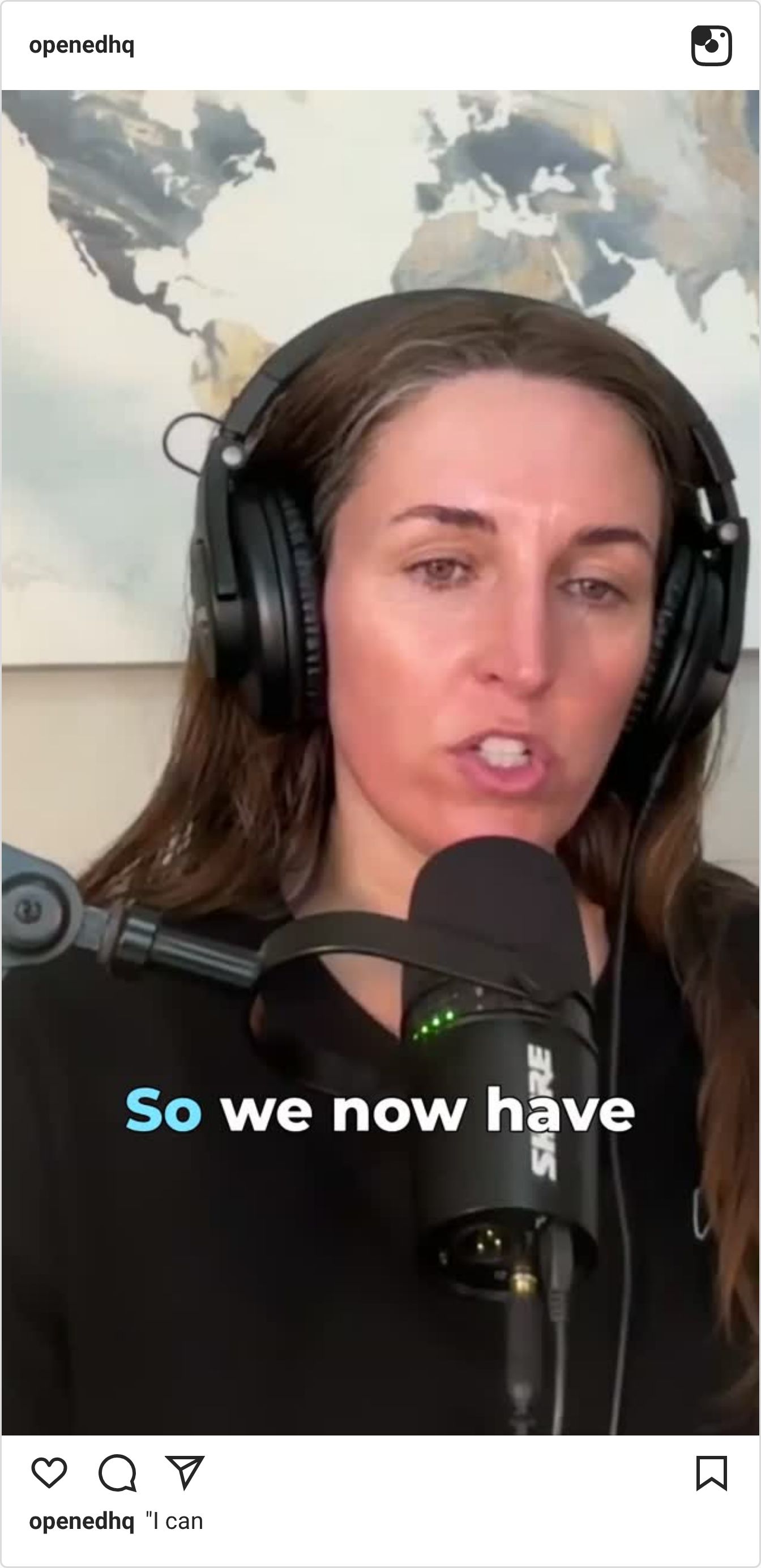
Today, Meg coaches other families who decide to make a change – even if only a temporary switch.
Thinking about a mid-year change? We’ve extended the mid-year enrollment deadline through Friday, November 20 (outside Kansas, where mid-year spots are full). Take our 2-minute Switching Quiz to see stories from families who switched mid-stream, or start an application here.
KIT & ED
Grade Expectations

One last thing: Set your email preferences to choose which OpenEd emails you receive. (Enrolled families still get required program updates.)
Have a great week!
– Charlie (the OpenEd newsletter guy)